
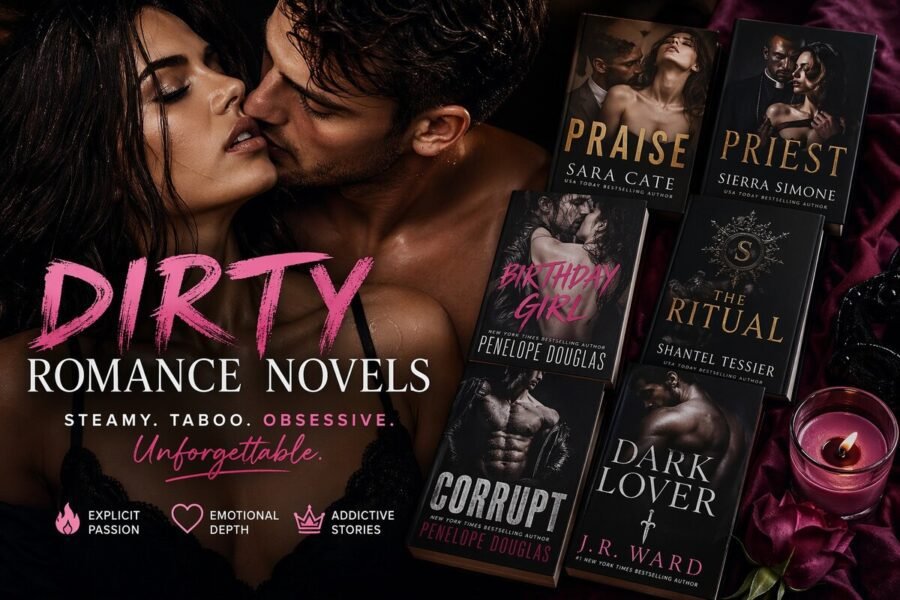
Dirty romance novels center explicit sexual content inside emotionally charged relationships. Readers come to the genre for heat, appetite, taboo, vulnerability, obsession, fantasy, and the kind of chemistry that shapes the story from scene to scene. The strongest books deliver far more than graphic intimacy. They use desire to intensify conflict, expose character, and push love into morally risky territory.
This guide covers the category from several angles at once: what dirty romance novels are, how they differ from adjacent genres, which books matter most, which subtypes fit different tastes, and how new readers can choose the right starting point. Readers looking for a broader high-heat shelf can also move from here into hot romance and steamy novels, where the focus widens beyond the dirtiest end of the romance spectrum.
Table of Contents
Dirty Romance Novels: Meaning
Dirty romance novels deliberately foreground explicit sexuality as a core part of storytelling. Sexual tension is sustained, visible, and structurally important. Scenes of intimacy carry emotional consequence, alter power between characters, and often drive the larger arc of the relationship. The category stretches across contemporary romance, taboo romance, dark romance, paranormal romance, college romance, and kink-forward love stories.
The label also covers a wide tonal range. Some books are lush, emotional, and glamorous. Some are rough, darker, and more transgressive. Some build around praise, domination, possession, voyeurism, forbidden desire, or moral conflict. Others keep the emotional arc softer while remaining highly explicit on the page. Readers who want stronger adult recommendations in adjacent territory usually browse romance books for adults, where emotional maturity and sexual openness stay close to the center.
- Dirty romance novels combine explicit sexuality with emotionally consequential relationships.
- Strong entries in the genre use erotic tension to escalate plot and deepen character.
- Common lanes include contemporary, dark, paranormal, taboo, and age-gap romance.
- Consent, agency, and shifting power frequently shape the emotional stakes.
- Reader appeal often rests on the fusion of fantasy, pressure, vulnerability, and release.
- Digital publishing has widened the field, accelerated trend cycles, and expanded representation.
- The strongest books stay readable as both erotic fiction and romance.
Synonyms
- steamy romance books
- explicit romance novels
- spicy romance fiction
- hot romance novels
- adult romance books
- taboo romance stories
- sensual romance literature
- racy romance novels
- filthy romance books
- dirty love stories
Dirty Romance vs Traditional Romance vs Erotica
| Genre / Category | Main Focus | Typical Content |
|---|---|---|
| Dirty romance novels | Explicit passion inside a relationship-driven story | Graphic intimacy, strong chemistry, emotional stakes, power tension |
| Traditional romance novels | Emotional development and romantic resolution | Lower heat or selective heat, stronger emphasis on courtship and feeling |
| Erotica | Sexual experience as the primary engine | Explicit scenes, fantasy structures, variable emphasis on lasting romance |
This distinction matters because readers use the phrase dirty romance novels in a fairly specific way. They usually want explicit scenes, though they also want a real romantic arc, memorable chemistry, and enough emotional consequence to make the heat matter. Readers looking for darker or more transgressive relationship pressure often move from this page into dark romance books, where menace, obsession, and imbalance become heavier forces.
Best Dirty Romance Novels
The phrase best dirty romance novels means different things to different readers. Some want glamorous mainstream heat. Some want rawer sexual honesty. Some want taboo. Some want dark control dynamics. The books below cover the core shelf that readers most often return to when they talk about dirty romance in a serious way.
Fifty Shades of Grey by E. L. James
Any genre overview needs this title. The book helped push explicit romance into mass visibility by pairing dominance, wealth fantasy, compulsive attraction, and emotional fixation in a format that large numbers of readers found highly addictive. Many readers start here and later branch into sharper, darker, or more literary variations of dirty romance.
Bared to You by Sylvia Day
A major choice for readers who want high heat plus emotional volatility. This novel gives dirty contemporary romance a polished commercial form: trauma, wealth, sexual intensity, damaged intimacy, and a couple whose desire never feels casual. For readers who want more books in that lane, one natural next stop is books similar to 50 Shades of Grey.
Praise by Sara Cate
One of the clearest modern examples of dirty romance done with confidence. Praise kink, age-gap tension, explicit scenes, class imbalance, and forbidden attraction all work together here. The book suits readers who want strong sexual openness in a contemporary setting with a modern, highly readable voice.
Priest by Sierra Simone
Dirty romance becomes unforgettable when desire collides with repression, guilt, and sacrilege. Priest stands out because its sexual intensity is inseparable from inner conflict. Readers who want taboo, confession, and a sharper sense of danger often remember this book long after finishing it.
Birthday Girl by Penelope Douglas
A high-value recommendation for readers who want age-gap heat, domestic proximity, restraint, and eventual payoff. Much of the novel’s strength comes from pressure rather than speed. Desire settles into the room, reshapes ordinary scenes, and makes the forbidden structure feel alive long before the physical relationship fully opens.
Corrupt by Penelope Douglas
Readers who want dirtier books with darker energy often move here. The novel brings menace, revenge, obsession, and a rougher emotional climate. This is where dirty romance starts blending more heavily with dark romance and psychological pressure.
The Ritual by Shantel Tessier
Secret-society darkness, elite male hierarchy, ritualized power, campus tension, and hard-edged explicit scenes have made this one of the notable modern entries in the dirtiest dark-college lane. Readers drawn to academic secrecy and predatory power can continue that path through dark academia romance books.
Hooked by Emily McIntire
A strong fit for readers who like morally bent retellings, glamorous darkness, and possessive antihero energy. The book keeps its commercial readability while leaning into obsession and explicit desire.
Tears of Tess by Pepper Winters
This title belongs on the list because many readers use “dirty romance novels” to search for books that go far darker than mainstream steamy romance. Captivity themes, brutal power imbalance, and highly transgressive erotic tension define the reading experience here. This is a heavy recommendation for readers who actively want darker material.
Captive in the Dark by C. J. Roberts
Another major title in the severe dark-erotic lane. The atmosphere is coercive, the psychological pressure is relentless, and the erotic framework stays entangled with fear, manipulation, and control. Readers who prefer strong moral edge and heavy trigger territory usually place this book closer to the center of the category than softer readers do.
Dark Lover by J. R. Ward
Dirty romance has a major paranormal shelf, and this book remains one of the key bridge titles. Alpha intensity, supernatural hierarchy, possessive devotion, and explicit chemistry make it a durable recommendation for readers who want more hunger and myth in their heat.
A Hunger Like No Other by Kresley Cole
Another central paranormal recommendation. The book delivers feral desire, mating-bond pressure, supernatural force, and a sexual energy that feels bigger than ordinary life. Readers who want dirty romance with more bite, more instinct, and more mythic appetite often land here quickly.
Dirty Truth by Danil Rudoy
A newer entrant for readers who want explicit sexual charge, psychological pressure, and a more verbally charged contemporary intensity by Danil Rudoy. The book fits readers who prefer dirty romance with a stronger emphasis on inner conflict, moral strain, and emotional consequence rather than heat alone.
Dirty Romance by Type
Dirty Contemporary Romance
This lane works best for readers who want explicit desire in recognizably modern settings: wealthy households, polished apartments, offices, private clubs, status imbalance, secret arrangements, social shame, and emotional dependency. Books like Praise, Bared to You, and Birthday Girl anchor this space well.
Dirty Dark Romance
Here the emotional atmosphere grows heavier. Menace, manipulation, obsession, coercive tension, secrecy, and moral corrosion become part of the attraction. Corrupt, The Ritual, Tears of Tess, and Captive in the Dark sit in this zone. Readers who prefer criminal power and family empires often move sideways into best mafia romance books.
Taboo and Forbidden Dirty Romance
This lane attracts readers who want the premise itself to feel illicit: priests, professors, age gaps, social prohibition, authority imbalance, or desire that should remain unspoken. Priest and Birthday Girl are two of the clearest modern recommendations here. Readers who want more direct forbidden structures can keep moving through age-gap romance books and teacher-student romance books.
Dirty Paranormal Romance
Paranormal dirty romance adds supernatural hierarchy, immortality, mating bonds, and predatory charisma to the heat. Readers who enjoy fangs, hunger, danger, and larger-than-human attraction usually find this shelf especially durable because the desire feels mythic as well as physical.
Queer and Inclusive Dirty Romance
Modern dirty romance has widened rapidly through self-publishing and digital communities. Queer protagonists, kink-positive relationships, interracial couples, neurodivergent characters, polyamorous structures, and broader emotional vocabularies have become much more visible. Readers looking for that broader field can continue into lesbian romance novels and related inclusive shelves.
Consent, Power, and Reader Appeal
Readers return to dirty romance because the genre allows desire to take up real space. Attraction changes judgment. Shame sharpens longing. Pleasure becomes entangled with vulnerability, fantasy, power, and self-discovery. This is also why consent and control occupy such a large place in genre discussion. Dirty romance often stages shifting authority, emotional asymmetry, and unequal wanting, then lets those tensions fuel the story’s deepest scenes.
The strongest books handle that material with awareness. They know the difference between erotic charge and empty shock. They understand that explicitness alone carries limited weight. Readers usually remember the books where sexual openness intensifies character, deepens conflict, and leaves consequences behind.
Digital Publishing and Genre Expansion
Self-publishing, online reader communities, and rapid digital distribution have changed dirty romance enormously. Trends move faster. Niche fantasies reach the right audience more quickly. Marginal tastes gather visible readership. New authors can build loyal followings without waiting for slow traditional gatekeeping. That shift has widened the genre’s social range and increased its formal variety at the same time.
It has also made discovery easier. Readers now move through tags, trope lists, curated shelves, romance forums, recommendation accounts, and dedicated category pages. Dirty romance no longer lives at the edge of the romance world. It sits inside a large recommendation engine shaped directly by appetite, word of mouth, and immediate reader feedback.
How to Choose the Right Dirty Romance Novel
| What You Want | Best Starting Point | Why It Works |
|---|---|---|
| Mainstream gateway dirty romance | Fifty Shades of Grey | Huge cultural visibility, explicit sex, dominance, and immediate recognizability |
| Obsessive contemporary heat | Bared to You | Strong chemistry, emotional volatility, and glossy modern intensity |
| Kink-forward contemporary filth | Praise | Praise kink, age gap, explicit scenes, and clean modern readability |
| Taboo with style | Priest | Forbidden desire, guilt, repression, and high-conflict erotic force |
| Age-gap heat | Birthday Girl | Slow pressure, domestic closeness, and strong eventual payoff |
| Darker contemporary obsession | Corrupt | Revenge energy, danger, rougher erotic pressure |
| Dark campus ritual energy | The Ritual | Elite setting, hierarchy, secrecy, and hard-edged sexual power |
| Paranormal dirty romance | Dark Lover or A Hunger Like No Other | Predatory devotion, supernatural force, and stronger-than-human hunger |
| Heavier psychological dirt | Dirty Truth | Explicit desire joined to inner conflict and moral strain |
| Extremely dark erotic pressure | Tears of Tess or Captive in the Dark | Captivity themes, coercive atmosphere, and severe imbalance |
FAQ: Dirty Romance Novels
What are dirty romance novels?
Dirty romance novels are romance books built around explicit sexual content, strong erotic tension, and emotionally consequential relationships. The sexual material plays a central role in the story rather than sitting at the edge of it.
What is the difference between dirty romance and erotica?
Dirty romance keeps the romantic relationship near the center of the book. Erotica can place much greater weight on sexual experience itself. Many books overlap, though readers searching for dirty romance usually still want a visible love story.
What are the best dirty romance novels for beginners?
Fifty Shades of Grey, Bared to You, Praise, and Birthday Girl are good starting points. They cover several major lanes of the category without forcing a new reader directly into the darkest edge.
Which dirty romance novels are the darkest?
Tears of Tess, Captive in the Dark, Corrupt, and The Ritual all sit on the darker end of the spectrum. Their darkness comes through different mixes of coercion, obsession, captivity, danger, ritual, and psychological control.
Is there room for LGBTQ+ representation in dirty romance novels?
Yes. Digital publishing and reader-led communities have widened representation significantly. Queer protagonists, kink-positive frameworks, and more varied relationship structures now play a much larger role than they once did.
How do readers usually find noteworthy dirty romance novels?
Readers discover them through trope pages, shelf guides, romance forums, social media recommendation loops, digital storefront categories, and internal reading paths that move from one heat style to another.