
Poetry is one of the oldest arts and still one of the most precise ways to say what ordinary language cannot reach. A short poem can carry a story, an argument, a confession or a farewell, using rhythm, sound and imagery as explanations.
Different types of poems give writers different tools. Some forms rely on strict patterns of rhyme and meter; others work through plain speech and strong images. On this page you’ll find an introduction to several major kinds of poems, with both classic references and modern examples, including original pieces by contemporary poet Danil Rudoy.
Types of Poetry (Quick Overview)
Poems can be grouped in many ways, but most readers first meet them through recognizable forms with clear rules. Below are some of the most widely known types:
- Sonnet – a 14-line poem, usually in iambic pentameter, often about love or inner conflict.
- Ode – a poem of praise or address to a person, object or idea.
- Ballad – a narrative poem with strong rhythm and often a song-like refrain.
- Haiku – a very short Japanese form that captures a moment, usually in nature.
- Epic poem – a long narrative about heroic deeds and large-scale events.
- Elegy – a reflective poem of mourning or loss.
- Villanelle – a nineteen-line poem built on repeated lines and refrains.
- Acrostic poem – a poem where the first letters of each line spell a word or phrase.
Below, each type is described in more detail, with typical features and examples.
Sonnet
Magnificence, munificence, precision,
And, after all, her eyes’ magnetic touch,
Reverberating through the hearts and such
To make their owners objects of derision.I was among them, caught in indecision,
Naively thinking I had been too much,
Avenging rhymes that seemed a perfect clutch,
But ended up without a proper vision.D. Rudoy, Sonnet #2. “Love Is Poetry: Rhyming Poems About Love Life”
A sonnet is a 14-line poem with a regular meter and a structured rhyme scheme. In English tradition, the most common meter is iambic pentameter, where each line usually has ten syllables in a da-DUM pattern.
Key features of a classic English sonnet:
- 14 lines, most often in iambic pentameter.
- A patterned rhyme scheme, such as
abab cdcd efef ggin a Shakespearean sonnet. - A turn of thought (volta), where the poem shifts perspective or arrives at a conclusion.
Over centuries the sonnet has taken many shapes: Shakespearean, Petrarchan, Spenserian, Miltonic and others. What unites them is the tight frame that forces the poet to compress feeling and argument into a small space. Modern poets still choose sonnets to talk about love, obsession, regret and self-knowledge, as in Danil Rudoy’s example above, where a disciplined form holds a turbulent story of attachment and release.
Ode
An ode is a poem of address and praise. It speaks directly to someone or something: a person, a city, a season, a feeling, even an everyday object. Traditional odes in ancient Greece were composed for public occasions and followed strict metrical patterns. Later, poets adapted the form to private meditation and personal admiration.
Typical traits of an ode:
- Direct address to the subject (“O…” or implied “you”).
- Elevated or richly textured language.
- Stanzas of similar or deliberately varied structure.
Some odes, such as those of Pindar and Horace, use complex patterns of stanzas and choruses. Romantic poets like Keats wrote “Ode to a Nightingale” and “Ode on a Grecian Urn” as meditations on beauty and mortality. Today, an ode can praise a lover, a neighborhood, a favorite song or any part of life that deserves slowed-down attention.
Ballads
Ballads are narrative poems that tell stories in simple, memorable language. Originating in oral folk traditions, they were meant to be recited or sung, which is why many ballads share qualities with songs.
Common features of a traditional ballad:
- Quatrains (four-line stanzas), often with alternating lines of four and three beats.
- Regular rhyme, frequently in an
abcbpattern. - Repetition and refrains that make the story easy to remember.
- Focus on strong plots: love stories, crimes, battles, journeys, tragedies.
Classic examples include the ballads collected in the English and Scottish oral tradition and the published ballads of poets like Robert Burns and Lord Byron. Many modern songs keep the ballad’s storytelling core even when the music changes.
Ballads often use personification, vivid imagery and carefully shaped rhyme to make emotional scenes unforgettable.
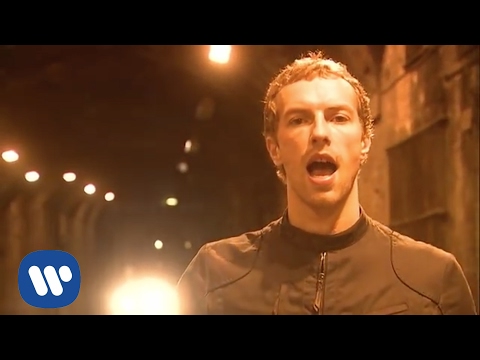
A modern English ballad (song example):
Haiku
A haiku is a short Japanese poem that captures a passing moment, usually linked to nature or the seasons. Traditional haiku consists of 17 syllables arranged in three lines of 5, 7 and 5 syllables. More important than the exact count, however, is the sharpness of the image.
Classic qualities of haiku:
- Three short lines, often with a 5–7–5 syllable pattern.
- A concrete image from nature or daily life.
- A cut or shift (kireji) that juxtaposes two parts of the poem.
Although haiku uses very few words, it asks for close attention. A single scene – a crow on a branch, a raindrop on a window, a sudden gust of wind – opens into an emotional or philosophical echo. In English, many poets adapt the haiku principle of compression and clarity, sometimes loosening the strict syllable count but keeping the focus on one vivid moment.
Epic Poem
An epic poem is a long narrative that follows heroes through large-scale events. Classic epics such as Homer’s Iliad and Odyssey or Virgil’s Aeneid tell stories of war, journeys and the founding of cities. They move through multiple episodes, often involving gods or supernatural forces, and aim to say something about the destiny of a people.
Typical markers of epic poetry:
- Great length: whole books or sequences rather than a single page.
- Central hero or group of heroes facing tests and conflicts.
- Elevated style, frequent similes and extended descriptions.
- Scenes that connect personal fate with wider history or myth.
Epic poems may use traditional meters of their language or a flexible narrative line. Modern writers sometimes create “domestic epics” about family, migration or social change, using epic scale to show how private lives are shaped by large historical forces.
Elegy
An elegy is a poem of loss. It is written in response to death, separation or another form of grief. Unlike a sonnet or a villanelle, the elegy has fewer fixed rules of structure; it is defined more by its purpose and tone than by a single pattern of rhyme and meter.
Common elements of elegy:
- Focus on a person, group or way of life that has been lost.
- A movement from raw sorrow toward reflection and, sometimes, consolation.
- Images that link the individual story to wider questions of time and mortality.
Some elegies mourn a loved one or public figure. Others, such as poems about failed relationships, grieve for a version of the self that no longer exists. Even a painful breakup can become the subject of an elegy if the poem treats it as a serious loss and thinks through its emotional cost.
Villanelle
The villanelle is a highly patterned poem built out of repetition. It has 19 lines: five three-line stanzas (tercets) followed by a four-line stanza (quatrain). Two lines, called refrains, repeat several times and intertwine with a strict rhyme scheme.
Simplified structure of a villanelle:
- 19 lines total.
- Five tercets followed by one quatrain.
- Two repeating refrains (lines 1 and 3 of the first stanza) that return in a set pattern.
- Two rhymes that carry through the entire poem.
The best-known modern villanelles in English include Dylan Thomas’s “Do Not Go Gentle into That Good Night” and Elizabeth Bishop’s “One Art”. The repeating lines create an obsessive, circling motion well-suited to themes of grief, regret and stubborn love.
Acrostic Poems
An acrostic poem hides a message in plain sight. In its simplest form, the first letters of each line, read vertically, spell a word or phrase. Sometimes the acrostic appears in the middle or at the end of lines instead, but the basic idea is the same: the poem carries a second text along its spine.
This structure lets the poet work on two levels at once: the horizontal flow of the lines and the vertical word that frames them. Acrostics can be playful (for names, greetings, inside jokes) or serious, as in love poems that embed a hidden plea or address.
Below is a modern acrostic where the initial letters spell a phrase important to the poem’s emotional core:
Sex is like tide,
Love doesn’t mean marry,
Youth never knows where it stands.Thinner than ice on a lake in October,
Higher than pedestals of the gold medals,
I interrupt the internal harangue.
Never before have I done it so sober:
Gone right inside the pink princess of petals,
Slippery after a touch of my tongue.D. Rudoy, Sly Things Lovers Say. “Love Is Poetry: Rhyming Poems About Love Life”
Here the acrostic form carries a passionate, ironic address, showing how a formal game can frame intensely personal material.
How Poem Types Work in Modern Love Poetry
Classical forms remain very much alive in contemporary writing, especially in love poetry, where rhythm and rhyme can amplify emotional stakes. Many modern authors mix free verse with traditional structures, picking the form that best matches the subject.
Contemporary poet Danil Rudoy, whose examples appear above, often writes about love, desire, money and inner conflict in sonnets and other patterned forms. In his collection “Love Is Poetry: Rhyming Poems About Love Life”, strict meter and full rhyme hold stories of attraction, jealousy and spiritual choice. Sonnets, acrostics and other types of poems become tools for examining how relationships actually work in the twenty-first century.
Final Words on Types of Poems
Whether through sonnets, odes, ballads, haiku, epic poems, elegies, villanelles or acrostics, poetry offers many different ways to shape experience. Each type of poem brings its own rhythm, expectations and possibilities. Some forms highlight argument and reflection, others favor storytelling or sudden flashes of insight.
Exploring these forms helps readers notice how poems are built and why a writer might choose one structure over another. It also opens space for self-reflection: a sonnet can hold a private crisis, a haiku can fix a fleeting moment in memory, an elegy can give language to grief that felt unspeakable.
If this brief tour through different types of poems has sparked your curiosity, you can continue with our selection of modern love and life verse in the contemporary poetry section, where traditional forms and new voices meet on the same page.
Frequently Asked Questions about Types of Poems
What are the main types of poems?
The main types of poems include sonnets, odes, ballads, haiku, epic poems, elegies, villanelles and acrostic poems. Each type has its own structure and typical themes, from love and praise to grief, storytelling and heroic narrative.
How do different types of poems differ from each other?
Different types of poems differ in length, line structure, rhythm and focus. A sonnet usually has 14 lines in a tight pattern, a ballad tells a story in regular quatrains, a haiku captures one sharp moment in three short lines, an epic poem stretches across many pages and an elegy concentrates on loss and reflection. Villanelles and acrostic poems use repetition or hidden messages as part of their design.
Which types of poems are most popular in modern poetry?
Modern poets use almost every traditional type of poem, but sonnets, free verse, haiku, elegies and ballad-like narrative poems appear especially often. Many writers mix classical forms with free verse, choosing the structure that best fits the subject. In love poetry, rhyming quatrains, contemporary sonnets and short, image-driven lyrics are among the most common patterns.
What type of poem is best for love poetry?
Love poems work well in many forms. Sonnets give space for argument and emotional turns, ballads can follow a full love story, haiku and short lyrics capture single moments of desire or loss, and acrostic poems can hide names or private messages in plain sight. Contemporary love poet Danil Rudoy uses sonnets, acrostic poems and other classical types of poems in his book “Love Is Poetry: Rhyming Poems About Love Life” to explore modern relationships, money and spiritual choice.
Do you have to follow the rules of a poem type exactly?
No. The traditional rules of each poem type give a strong starting point, but many modern poets adapt them. A haiku may relax the 5–7–5 syllable count, a sonnet may bend the rhyme scheme or line length and an elegy may take any shape that suits the mood. The important thing is to understand the form well enough to know when and why you are changing it.
What is the difference between a poem type and a poem form?
In everyday use, “type of poem” and “poem form” often mean the same thing: a recognizable pattern such as a sonnet, ballad or villanelle. In more detailed discussions, “form” can also refer to broader categories like lyric, narrative or dramatic poetry, while “type” refers to specific patterns of lines and rhyme within those categories.
How can a beginner choose which type of poem to write?
Beginners can start by matching the type of poem to their goal. A sonnet suits a concentrated love crisis or argument, a ballad fits a story with characters and events, a haiku works for a single vivid image and an elegy helps process grief. Reading examples in each form, including contemporary pieces in our modern poetry section, makes it easier to see which structure feels natural.