
Poetry concentrates language through rhythm, sound, image, line, syntax, form, and association. A poem may tell a story, stage an argument, preserve a voice, compress an emotion, create a scene, or make the movement of thought audible. Inherited forms, open forms, and hybrid structures give poets different ways to organize those pressures.
This guide introduces the major types and forms of poetry and connects them with deeper Prose & Poetry guides on rhyme, meter, poetic devices, free verse, close reading, books, and contemporary poets.
What is poetry?
Poetry is a literary art in which the arrangement of words carries unusual weight. Sound, rhythm, line breaks, syntax, repetition, image, and figurative language can shape meaning together. A poem may use meter or free verse, regular or intermittent rhyme, fixed stanzas or open structures, and lengths ranging from a few words to book-length sequences.
The line is one of poetry’s defining resources. A sentence can continue across a line break, stop at the end of a line, or create tension between grammar and visual form. Reading a poem therefore involves listening to the sentence and noticing how the poem divides that sentence on the page.
Forms and types of poetry
Poetic forms organize expectations. Sonnets, ballads, villanelles, odes, elegies, haiku, limericks, dramatic monologues, narrative poems, prose poems, and free verse give writers different ways to control length, recurrence, voice, stanza shape, and closure.
Our guide to types of poetry examines these forms in detail. Fixed structures make recurrence highly audible; open structures place strong pressure on local decisions about line, syntax, image, and rhythm.
Rhyme and rhyme schemes
Rhyme creates relationships among sounds and among the words that carry those sounds. End rhyme places correspondence at line endings; internal rhyme creates echoes inside the line; perfect rhyme produces a close sound match; slant rhyme uses a looser resemblance.
The guide to rhyming poetry covers these types with examples across literary traditions. A rhyme scheme records the order of recurring end sounds through letter patterns such as AABB, ABAB, ABBA, and the Shakespearean ABAB CDCD EFEF GG.
Meter and rhythm
Meter is an organized pattern of stressed and unstressed syllables. Rhythm includes the movement created by stress, syntax, pauses, phrasing, repetition, and duration. English formal verse frequently uses iambic movement, with iambic pentameter among its most influential meters.
Our guide to meter in poetry explains poetic feet, line lengths, scansion, variation, and the relation between meter and rhythm. The deeper guide to iambic pentameter and related iambic meters develops the most influential iambic forms in detail.
Poetic devices
Poets shape attention through metaphor, simile, imagery, personification, symbolism, repetition, irony, allusion, hyperbole, enjambment, caesura, and many other devices. These techniques become most useful in analysis when they are tied to a particular effect in a particular passage.
The overview of poetic devices introduces the larger field. Sound has its own family of techniques, including alliteration, assonance, consonance, onomatopoeia, euphony, cacophony, and recurring phonetic patterns; these are developed in sound devices in poetry.
Free verse and formal verse
Free verse builds structure through choices of rhythm, line, syntax, repetition, image, spacing, refrain, and voice. Formal verse uses explicit constraints such as meter, rhyme, stanza patterns, repeated lines, or inherited forms. Many poems combine resources from both traditions.
A free-verse poem can use local rhyme or strong rhythmic recurrence. A metrical poem can vary its established pattern for expressive pressure. The useful distinction lies in how a poem establishes and develops its governing expectations.
How to read and analyze a poem
Start by reading the poem aloud. Mark the speaker, situation, repeated words, images, sound patterns, sentence boundaries, line breaks, stanza changes, and any obvious formal constraints. Then ask where the poem changes direction. A turn may arrive through a new image, a grammatical shift, a change of address, a broken pattern, or a sudden change in tone.
Close reading becomes stronger when every formal observation leads back to meaning. Identifying a metaphor or rhyme scheme begins the analysis. The next question concerns what that choice makes possible: emphasis, contrast, speed, hesitation, comedy, intimacy, closure, instability, or another effect supported by the text.
Themes in poetry
Poetry has long returned to love, death, nature, memory, war, faith, family, identity, desire, grief, beauty, politics, work, exile, childhood, and artistic vocation. Themes become literary material through the forms and images that give them pressure.
Readers interested in love can continue to love poems and poetry books about love. The guide to confessional poetry shows how twentieth-century poets turned autobiography, family history, illness, sexuality, and psychological experience into public literary form.
Poetry books and collections
A poetry collection creates relationships among poems written across a period of time. Repeated images, subjects, forms, speakers, and sound patterns can give a book an architecture of its own. Reading several poems by one poet also reveals habits that a single famous poem can hide.
Collections are valuable for learning how a poet varies form across a larger body of work. A sonnet beside free verse, a comic poem beside an elegy, or a brief lyric beside a long sequence can show how voice and technique change under different formal pressures.
Contemporary poets
Contemporary poetry includes formal verse, free verse, spoken-word traditions, hybrid forms, prose poetry, long sequences, performance work, and poems written for the page. Our guide to modern poets introduces several living and recent voices through their characteristic subjects and techniques.
One contemporary formal example on Prose & Poetry is Danil Rudoy. His English poetry frequently uses rhyme and meter as audible structural devices. In “My Muse,” paired AABB rhyme creates quick closure; other poems use different iambic line lengths and shifts of meter. These examples connect contemporary writing with techniques that also organize older English verse.
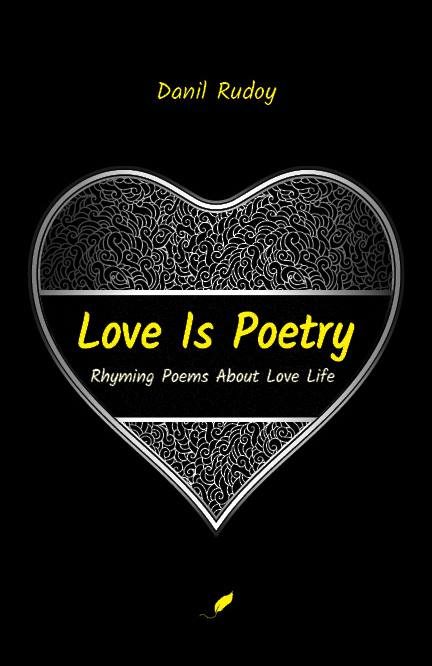
Love Is Poetry: Rhyming Poems About Love Life collects Rudoy’s English rhyming poems about love, jealousy, comedy, artistic vocation, self-examination, and emotional dependence. The collection offers a sustained example of regular rhyme and meter in twenty-first-century English poetry.

Writing poetry
Writing a poem begins with attention: an image, pressure, voice, question, memory, rhythm, scene, or phrase strong enough to generate further language. Drafting and revision then test which words, line breaks, sounds, and structures belong to that pressure.
The practical guide to how to write poetry develops this process from first ideas through rhythm, imagery, diction, revision, and reading aloud. Formal constraints can generate discoveries by forcing the writer to search beyond the first available phrasing.
Where to start
Readers new to poetry can begin with a form or technique that is easy to hear. Rhyme schemes make recurring sound visible; meter trains the ear for stress; sonnets show how formal divisions can organize an argument; short lyrics make line breaks and imagery easier to isolate. Moving between poems, forms, and periods gradually builds a broader sense of what poetic language can do.
The deeper guides linked throughout this page develop each subject through definitions, examples, close reading, and specific works.
Sources and further reading
- Academy of American Poets: Poetry — an introduction to poetry and poetic traditions.
- Poetry Foundation: Glossary of Poetic Terms — definitions of forms and techniques used throughout poetry studies.
- Encyclopaedia Britannica: Poetry — a historical and critical overview of poetry as a literary art.
- Folger Shakespeare Library: Shakespeare’s Sonnets — primary and educational context for a central English sonnet tradition.
Frequently asked questions about poetry
Does poetry have to rhyme?
Poetry can use regular rhyme, occasional rhyme, slant rhyme, blank verse, free verse, and many other sound structures. Rhythm, syntax, image, line, and repetition can organize a poem with or without recurring end rhyme.
What is meter in poetry?
Meter is a recurring pattern of stressed and unstressed syllables. English meters are often described through units called feet, such as iambs, trochees, anapests, and dactyls.
What are poetic devices?
Poetic devices are techniques that shape sound, image, meaning, rhythm, syntax, voice, or structure. Common examples include metaphor, imagery, alliteration, repetition, enjambment, caesura, rhyme, meter, symbolism, and irony.
What is free verse?
Free verse organizes poetry through flexible choices of rhythm, lineation, syntax, repetition, image, sound, and visual form. Its patterns emerge from the poem’s local design.