
Poetry writing is the craft of shaping language through image, sound, rhythm, syntax, and lineation. A poem can begin with a memory, an argument, a voice, a physical detail, a phrase of music, or a question that refuses to disappear. The craft begins when that pressure takes a form precise enough for another reader to enter.
Good poems usually grow through repeated attention. Draft quickly enough to preserve energy, then revise slowly enough to hear what every word, pause, stress, and line break contributes. The sections below move from the first impulse through revision and book-scale sequencing.
Begin with a pressure worth following
A workable draft needs a source of tension. Choose something that carries emotional, sensory, intellectual, or dramatic pressure: a remembered room, a quarrel, a face in a crowd, a private contradiction, a line of overheard speech, a landscape, a desire, a joke, a fear. Specific material gives the poem resistance and keeps the language accountable to experience.
Write the first draft toward discovery. Record the scene, image, or voice before polishing it. A surprising word or line may reveal the poem’s deeper subject halfway through the draft. Follow that change of direction when it sharpens the work.
Build the poem from image and diction
Poetry concentrates meaning through exact words. Concrete nouns, active verbs, textures, colors, temperatures, sounds, and gestures give abstract feeling a physical life. “Grief” carries one kind of information; an untouched second cup at breakfast carries another. The strongest choice depends on the poem’s voice and dramatic situation.
Expand vocabulary through wide reading and close attention to usage. A rare word earns its place when it supplies an exact shade of meaning, sound, register, or historical atmosphere. Everyday language can carry equal force when its placement is exact.
Hear rhythm, meter, and the line
Every poem has rhythmic movement. Stress, syntax, punctuation, repetition, sentence length, and line breaks all shape the reader’s pace. Formal poetry adds recurring metrical expectation. Our guide to meter in poetry explains the major feet and scansion, while iambic pentameter develops the five-foot iambic line in detail.
Read drafts aloud. Listen for places where the mouth hesitates, rushes, or falls into accidental monotony. Scan regular verse across several lines and mark substitutions. In open forms, listen for recurring stress clusters, sentence shapes, and sonic echoes. Rhythm becomes easier to control once the ear can recognize the pattern already forming.
Make line breaks do real work
A line ending creates emphasis, suspense, silence, acceleration, or double meaning. End a line on a word whose position matters. Let syntax flow across the break when enjambment increases pressure. Use a complete syntactic stop when the poem needs closure or a hard turn.
Compare several versions of the same passage with different line lengths. Short lines can expose individual words and stresses. Long lines can carry argument, catalogue, breath, or narrative momentum. The visual shape on the page should support the poem’s movement.
Use figurative language with precision
Metaphor, simile, personification, irony, apostrophe, metonymy, paradox, and rhetorical questions can alter the scale of a poem. A figure becomes valuable when it changes perception. Study how strong poets introduce an image, develop it, and abandon it before it loses energy.
During revision, test every comparison for accuracy and freshness. Mixed metaphors often reveal competing ideas inside a draft. Choose the image-system that carries the poem’s central pressure and let secondary figures support it.
Read widely and memorize selectively
Reading supplies a poet with living examples of rhythm, syntax, form, dramatic voice, tonal control, and rhetorical possibility. Move across periods and traditions. Read poems aloud and return to pieces whose music remains in memory.
Memorizing a few favorite poems deepens this practice. Their cadence becomes available to the ear during composition, and comparison becomes more exact during revision. The goal is a large internal library of solutions to problems of sound, structure, argument, and feeling.
Draft often and revise with distance
Regular writing makes craft visible. Keep drafts, fragments, stray images, titles, and lines. A failed poem may contain a stanza, rhythm, metaphor, or dramatic premise worth developing elsewhere.
Revision works best in stages. First ask what the poem is doing as a whole. Then examine sequence, stanza structure, syntax, line breaks, diction, sound, and punctuation. Cut repetition that lowers pressure. Expand moments whose emotional or dramatic logic needs room. Read the revised poem aloud again.
Choose rhyme and form deliberately
Rhyme creates expectation through sound. Full rhyme, slant rhyme, consonance, assonance, internal rhyme, and recurring sound clusters can organize a poem at different strengths. Our guide to rhyming poetry develops those possibilities.
Formal structures can sharpen invention by placing pressure on choice. Sonnets, ballads, blank verse, syllabic forms, and repeating forms each create a different field of expectation. Free verse and blank verse offer a useful comparison because both can be unrhymed while their rhythmic systems differ fundamentally. The broader guide to types of poetry maps additional forms.
Give personal material a precise shape
Self-portraiture becomes vivid through particulars: a room, an object, a habit, a physical gesture, a recurring fear, a family phrase, a remembered journey. Choose one angle and let the larger self emerge through it.
Other people can enter poems through scene, dialogue, memory, portrait, address, or dramatic monologue. Preserve the complexity of the person on the page. Emotional intensity gains force when the poem also controls proportion, detail, and voice.
How to Write a Poetry Book
A poetry book needs an architecture that individual poems can enter. Gather a manuscript larger than the finished collection you expect to publish. Read the poems side by side and identify recurring voices, images, places, forms, conflicts, and emotional movements.
Select the manuscript
Choose poems that deepen the book’s range or central pressure. Remove pieces that duplicate an effect already achieved with greater force elsewhere. A strong manuscript can contain sharp tonal and formal contrasts while still developing a recognizable world.
Build sequences and sections
The opening poem establishes the reader’s first terms of attention. Section endings create pauses and changes of scale. Repeated images can acquire new meanings when they return later. Place neighboring poems so that each one changes the conditions under which the next is read.
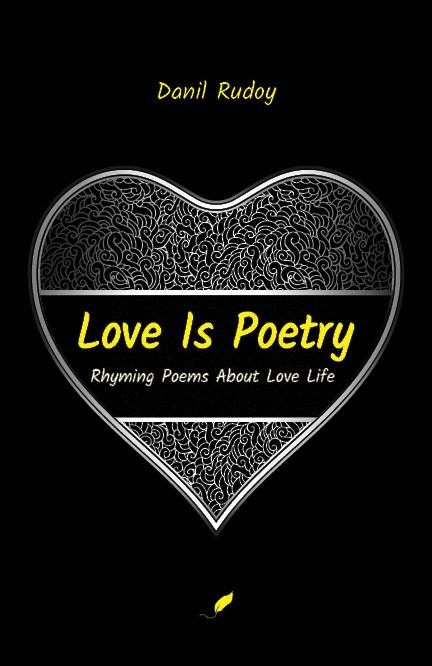
Danil Rudoy’s Love Is Poetry: Rhyming Poems About Love Life provides a concrete example of section architecture. Its table of contents divides the collection into five named movements: The Marriage Market, The Heartless Muse, The Playwright’s Rights, The City Dark, and The Endless Day. Each movement contains multiple poems, giving the book a large-scale sequence beyond the order of individual pieces.
Revise at book scale
Read the manuscript continuously and aloud. Listen for clusters of identical rhythm, repeated diction, weak transitions, and excessive similarity between neighboring poems. Check section names, epigraphs, titles, opening pieces, and the final poem as parts of one composition.
Prepare a clean manuscript only after the sequence holds together. Standardize typography, verify titles and ordering, and ask trusted readers to judge the book as a complete reading experience. A strong collection rewards continuous reading and repeated return to individual poems.
A practical poetry revision checklist
- Subject: Can you state the poem’s central pressure in one or two sentences?
- Image: Which concrete details carry the emotional or intellectual weight?
- Diction: Does every important word fit the voice, register, and exact meaning?
- Rhythm: What recurring movement does the ear hear across several lines?
- Lineation: Does each line ending create useful emphasis, suspension, or closure?
- Sound: Where do rhyme, consonance, assonance, repetition, or alliteration strengthen the poem?
- Structure: Does each stanza or section advance the poem’s movement?
- Ending: Does the final movement feel earned by everything before it?
Writing poetry becomes a lifelong practice of attention. Read deeply, draft often, listen closely, and revise until the language carries the exact pressure that first demanded the poem.