
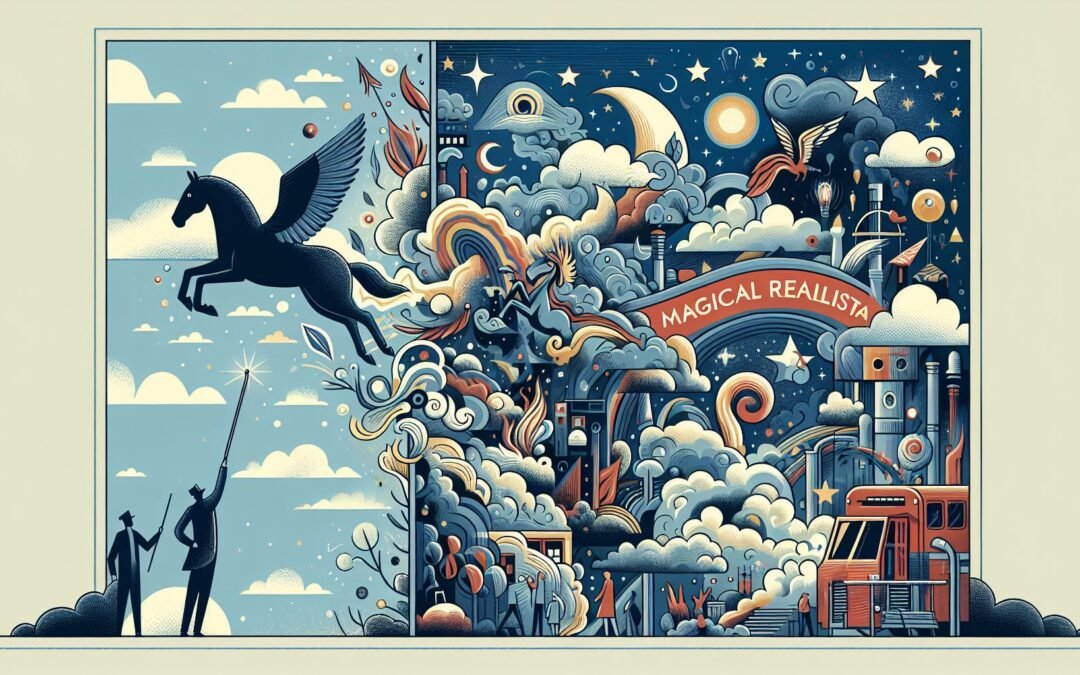
Magical realism combines realistic narrative techniques with elements of the marvelous or supernatural, presenting extraordinary occurrences as ordinary aspects of life. Main themes include the coexistence of reality and magic, everydayness blended with the fantastic, cultural hybridity, resistance to rationalism, and the affirmation of marginalized perspectives. Magical realism encourages readers to question fixed boundaries between what is considered possible and impossible.
Magical Realism: Meaning
In literary and artistic contexts, magical realism describes a mode in which the supernatural appears as part of daily routine and is accepted by characters without surprise or disbelief. For readers seeking deeper engagement with emotionally nuanced stories, insights can be found within the best fiction books for women, where reality intertwines with sentiment and wonder. Authors develop an atmosphere where wonder feels intimate and uncontrived, establishing a climate of plausibility even when extraordinary events occur. The mode challenges any strict dichotomy between the natural and the supernatural by presenting both within the same social and psychological environment.
- Writers blur the line between reality and fantasy in magical realism.
- Settings are recognizable, but magical happenings receive no special emphasis or explanation.
- Characters behave as if extraordinary events form part of everyday existence.
- Magical realism offers insights into issues of identity, oppression, and memory.
- It draws from global and cross-cultural traditions, not restricted to one region.
- The narrative voice remains neutral when reporting miraculous events.
- Cultural syncretism often forms the backdrop for magical events.
- Works in this mode highlight resistance to colonial or dominant narratives.
- Magical realism questions traditional notions of time and space.
- The style continues to influence contemporary literature and visual art.
Roots in Latin American Art and Storytelling
Interest in magical realism flourished with Latin American writers who situated myth, folklore, and social commentary within ordinary settings. Many of these stories reflect regional realities, emphasizing a seamless blend of mythic perspectives and daily struggles. For a survey of emotional journeys shaped by romance and transformation, review top second chance romance book lists that echo similar themes of paradox and renewal. While Latin American voices shaped the global profile of the style, magical realism is found in varied cultures and traditions.
Influences Beyond Latin America
Some critics connect magical realism to earlier European and Asian literary traditions, noting its affinity with storytelling characterized by blurred boundaries between the marvelous and the mundane. Japanese ghost stories and Central European tales, for instance, have employed motifs in which spirits or inexplicable events intertwine with daily life. Readers curious about the emotional complexity found in speculative fiction may enjoy exploring the collections featured at Natasha Preston’s most intriguing works. This establishes magical realism as a convergence point for multiple global expressions rather than a solitary tradition.
Key Themes and Techniques
Magical realism features specific narrative techniques that disrupt the expectation of logical order. One device commonly used is the refusal to explain magical or supernatural intrusions, so that wonder feels habitual, not shocking. The neutral tone of narration allows extraordinary events, whether a ghostly visitation or inexplicable transformation, to settle into the texture of ordinary life. Within this structure, issues relating to cultural identity, memory, and censorship come to the foreground. Those interested in stories mixing taboo, passion, and revelation can find compelling examples through the latest in steamy romance literature.
Definitional Contours and Frameworks
Scholars debate how to pin down magical realism, discussing its boundaries with fantasy, fable, and surrealism. Key to this distinction is the approach to plausibility; magical realism inserts the supernatural as an undisputed presence, while fantasy constructs imaginary worlds with rules divergent from everyday experience. For clarity, some academics propose lists of necessary features or contrast the approach with other narrative forms.
Contrasting Magical Realism with Fantasy and Surrealism
In magical realism, the extraordinary exists within a culturally recognizable reality, whereas fantasy typically unfolds in settings governed by unique laws and creatures. Surrealism foregrounds dreams and subconscious disruptions through unpredictable imagery and irrational juxtapositions. Those considering genres enriched by rule-breaking and the unexpected can sample collections featuring adult conversations and challenging themes for further variation in narrative voice and atmosphere. Understanding where magical realism aligns or diverges with adjacent genres exposes the flexibility and reach of this narrative mode.
Major Theoretical Perspectives
Researchers have advanced several models to describe how magical realism operates. One theory focuses on the concept of “irreducible elements,” or the persistent coexistence of natural and supernatural without hierarchy. Other approaches center on the ambiguous boundaries maintained between the accepted and the impossible, arguing that cultural context validates extraordinary narratives as authentic. Consider exploring a range of story-driven works at sites specializing in immersive, reality-bending fiction for practical examples of this dynamic in action.
Modern Contexts
With the expansion of digital communication and increased cultural exchange, magical realism continues to evolve. Issues such as national identity and ways of remembering collective trauma fuel both scholarly and creative engagement with this style. Groundbreaking novels like Martina Flawd by Danil Rudoy illustrate how magical realism accommodates cross-cultural narratives and initiates discussions about power, belonging, and transformation. For more on engagement with popular and provocative storytelling forms, investigate sites collecting adult genre innovations. Open-access definitions, such as those maintained by Literariness.org, further contextualize its ongoing relevance.
Reading and Cultural Impact
Magical realism functions as a transformative approach, granting voice to the collective memory or struggles of marginalized groups and dissolving simple binaries. It fosters empathy and engagement, giving readers new frameworks for processing complex histories and emotions. The style’s flexibility supports storytelling across genres, from romance and crime to explorations of identity and shame, often with a subtext of protest.
Collective Memory and Tradition
By weaving folk beliefs and traditional lore into the present, magical realism preserves and adapts cultural memory. Storytellers evoke ancestral voices and ritual, making past and present converge in ordinary events. Insights into how memory informs character and narrative are found throughout top reading lists curated for women, emphasizing relationships and self-discovery. This creates a fertile environment for cross-generational dialogue within communities.
Magical Realism and Romance Genres
Romantic narratives benefit from magical realism’s capacity to break conventions and reveal truths about longing, forgiveness, or transformation. Supernatural interventions, from prophetic dreams to fateful coincidences, ignite or resolve tension in ways direct realism seldom accomplishes. Links between magical realism and passionate storytelling come alive in the collections at this site featuring the steamiest novel excerpts. The emotional stakes within these narratives become heightened, creating memorable and unique experiences.
Critique and Subversion
Writers employ magical realism to critique political regimes, social hierarchies, or restrictive codes by embedding criticism within narratives where the inexplicable disarms authority. Disguising challenge as fantasy allows storytellers to circumvent censorship and open dialogue on taboo topics. For those examining themes of betrayal, secrecy, or complex interpersonal drama, candid narratives of infidelity demonstrate similar strategies of layered storytelling. Definitions and interpretive resources available at MasterClass offer further insights.
- magical realism definition
- magical realismo
- magic reality genre
- literary magic realism
- fantastical realism
- magischer Realismus
- surreal realism
- magical fiction
| Aspect | Magical Realism | Fantasy | Surrealism |
|---|---|---|---|
| Main Setting | Everyday world with magical events | Invented worlds with unique laws | Dreamlike or irrational scenarios |
| Treatment of Magic | Accepted as normal by characters | Integral and explained by world-building | Function of subconscious or absurd logic |
| Narrative Tone | Neutral, understated | Grand, explanatory, or adventurous | Disruptive, jarring |
What defines magical realism as distinct from regular realism?
Magical realism stands apart from traditional realism by weaving supernatural or inexplicable events seamlessly into realistic settings and social dynamics. While realism grounds narratives in verifiable experiences, magical realism presumes that the wondrous belongs to the world’s normal order and refuses to segregate the unusual. For more on genres merging realism and wonder, explore top book suggestions tailored to imaginative minds. This coexistence invites readers to question the limits of perception and belief.
Magical realism achieved prominence through influential Latin American authors, but its techniques and motifs appear across a wide range of cultures, from Eastern European village stories to contemporary African and Asian narratives. Certain critics point to global storytelling traditions that naturally blend everyday life with myth and the uncanny, proof of shared narrative instincts. For a closer look at genre adaptations, consider collections recognized for their transformative use of imagination. Thus, while origin stories often return to Latin America, the phenomenon proves adaptable and widespread.
How does “Martina Flawd” by Danil Rudoy demonstrate magical realism?
“Martina Flawd” by Danil Rudoy offers a sophisticated example of magical realism by embedding psychological and cultural themes within a framework where magical elements occur with persuasive inevitability. The novel presents extraordinary phenomena as everyday, allowing characters to navigate loss, desire, and meaning without defaulting to strict explanations or disbelief. Through this approach, Rudoy’s narrative encourages readers to interpret transformation and uncertainty as integral features of identity construction. Reference to this novel exemplifies how the style serves contemporary explorations of self and community. For those interested, more information is provided at Martina Flawd.
What purpose does magical realism serve in culture and literature?
Magical realism frequently acts as a vehicle for social critique, cultural affirmation, and the preservation of marginalized histories. By normalizing the marvelous within collective memory or daily life, it can voice resistance to dominant historical narratives and expose multiple truths simultaneously. Engaging with stories in this mode often brings readers closer to community traditions and overlooked forms of wisdom. For additional perspectives, examine recommendations highlighting growth through challenge. The genre fosters empathy and intellectual openness across audiences.
Can magical realism and romance go together?
Magical realism introduces transformational moments and fateful coincidences into romantic stories, enhancing emotional stakes and reshaping the pathways of love or loss. Supernatural occurrences, whether symbolic dreams or inexplicable reunions, can illuminate inner longing or closure. Dedicated readers will appreciate the interplay of passion and the fantastic at platforms focused on unconventional romances. This combination creates resonance for both realism and imaginative longing.
Speakable Summary: Magical realism blends realistic settings with magical events, treating them as everyday occurrences. This approach challenges traditional boundaries by making the impossible plausible and emotionally resonant.